
Why Good CBT Clinical Supervision Should Feel Human
If you’re a CBT therapist or other healthcare professional who uses CBT in their practice, you’re probably no stranger to our NHS - or any other work environment that is busy, understaffed, underpaid, and ever-pressured.
An environment in which too often, truly nourishing, reflective spaces take a backseat because there are targets to be met, risk and safeguarding to be managed, and just too many clients on everyone’s caseloads.
An environment in which people start holding on to rigidity because that’s how things are done, and no one has any headspace to question it.
Where supervision becomes a space to quickly get through as many clients as possible and tick the box that they’ve been brought to supervision. Where “sticking to the evidence base” has gone from trying to prevent therapist drift to almost robotically applying interventions without understanding why, and where creativity is thought to be unorthodox.
Most importantly, a space in which, too often, there is an unspoken (or sometimes, actually spoken) rule that you should have it all together, be professional, and get things done - which, really, means that many people feel they can’t be vulnerable.
That’s not my style.
CBT supervision should be more than case management
Sometimes, you’re stuck as to what to do with a client - from a “technical” point of view - and you just want to walk out of supervision with answers. Or, you have lots of clients, and want to make sure you’re on the right track. Or you have some doubts regarding risk and want a second pair of eyes, for safety.
All valid. And sometimes, that’s genuinely what you need. I’ve been there - and the last thing you want is for your supervisor to start giving you vague answers and make you reconsider your whole approach to work.
But the best supervision sessions I’ve come out of were those where I was asked - not forced, but asked - to slow down, and dig a bit underneath all this.
Because being stuck from a technical point of view might come with self-doubt, imposter syndrome - and frustration.
Having lots of clients and wanting to make sure you’re on the right track might come with overwhelm, emerging burnout, or even questioning career paths.
Having doubts regarding risk might come with over-responsibility.
Sometimes you do just need answers. But if this becomes a pattern, having a supervisor who can gently challenge you - with permission and collaboratively - is what really contributes to your development as a CBT therapist.
Why the supervisory relationship matters so much
There’s one piece of unsolicited advice I always give my CBT trainees when they’re starting their training year - if in doubt, be human. And I think it applies to any therapist, no matter how experienced they are.
Because I genuinely believe, and have seen in clinical practice, that this is what can get you out of almost any situation where you’re feeling lost, stuck, or unsure what to do next.
Sounds simple. But as cliche as this sounds, it’s simple, but not easy.
Because being human means being willing to be vulnerable. Mistaken. Confused. Forgetful. Imperfect.
And when you’re already doubting yourself (because, if we’re honest, many of us therapists are at least a lil’ perfectionistic), that’s bloody hard. It’s easier to pretend, both in your sessions, and in supervision.
Which is why I, as a CBT supervisor, will rarely, if ever, pretend. I’ll admit to not knowing the answer, losing my train of thought, or being tired. And in doing so, I hope I’ll make it feel safe enough for you to learn that it’s ok to do the same.
I’ll ask you what’s helpful and what isn’t, and make it feel like it’s ok to be honest. I’ll suggest things, and give you my opinion, but never make you participate in anything you’re uncomfortable with. And in doing so, I hope you’ll see how you can do this too, with your clients, and your own supervisees.
I’ll name the difficult stuff, knowing fully that there’s no way I could know exactly what your, or your client’s experience may be, if you are part of any number of oppressed groups. I’ll inform myself instead of expecting you to teach me, but I’ll also make it clear that I’m happy to be corrected. And in doing so, I’ll show that this is the brave thing to do.
What this means in supervision
I’ve definitely had some supervision in the past where I kept things clinically relevant and appropriate, without getting in too deep. I wanted to make a good impression and not be judged because “I should have known this by now”.
But the supervision I grew the most in? You guessed it - the one where I said “I still don’t get this” or “I feel bad even bringing this up, but…” or “I don’t think that’s right”. Where I understood that the therapist, and person I want to be, is one who owns up to where she’s at, and trusts that that will mean she is a good therapist - not just pretending to be one.
Good CBT supervision goes way beyond “what behavioural experiment would work here”. It creates the space to uncover whether you always needing to be prepared and beating yourself up when things don’t go as planned might actually mean you’re doubting yourself, and taking too much responsibility, and expecting too much of yourself (and sometimes, your clients, in a desperate attempt to make them better). Because that’s not just unsustainable for you in the long run, but often shows up in your sessions as disconnection from your clients.
And when all of this is in place, it’s almost as though there’s more space to develop technically too. You’re not afraid or ashamed to bring ideas that seem a bit “out there” - like a behavioural experiment that you wouldn’t want anyone to hear about out of context. You’re more open to trying things that scare you a little - like an experiential exercise, a discussion about the therapeutic process, or blending in ACT or mindfulness. And most of all, supervision becomes something you don’t dread, and maybe even look forward to.
If you want CBT supervision that feels more human...
I’m here. Whether it’s continuing to develop your CBT skills, thinking about process issues and who you are (and want to be) as a therapist, and/or getting you through your training year or towards BABCP accreditation, this is exactly the kind of thing I support people with in supervision.
You can read about how I approach CBT supervision, and also, a guest post I wrote on CBT supervision, where I explore cultural humility (as opposed to cultural competence) in supervision.

Hi, I’m Carina - an experienced, yet very human BABCP-accredited CBT supervisor who supervises on one of London’s biggest and most reputable BABCP-Accredited CBT courses, and has also provided CBT clinical supervision as Senior CBT Therapist in the NHS (and in other similar roles).
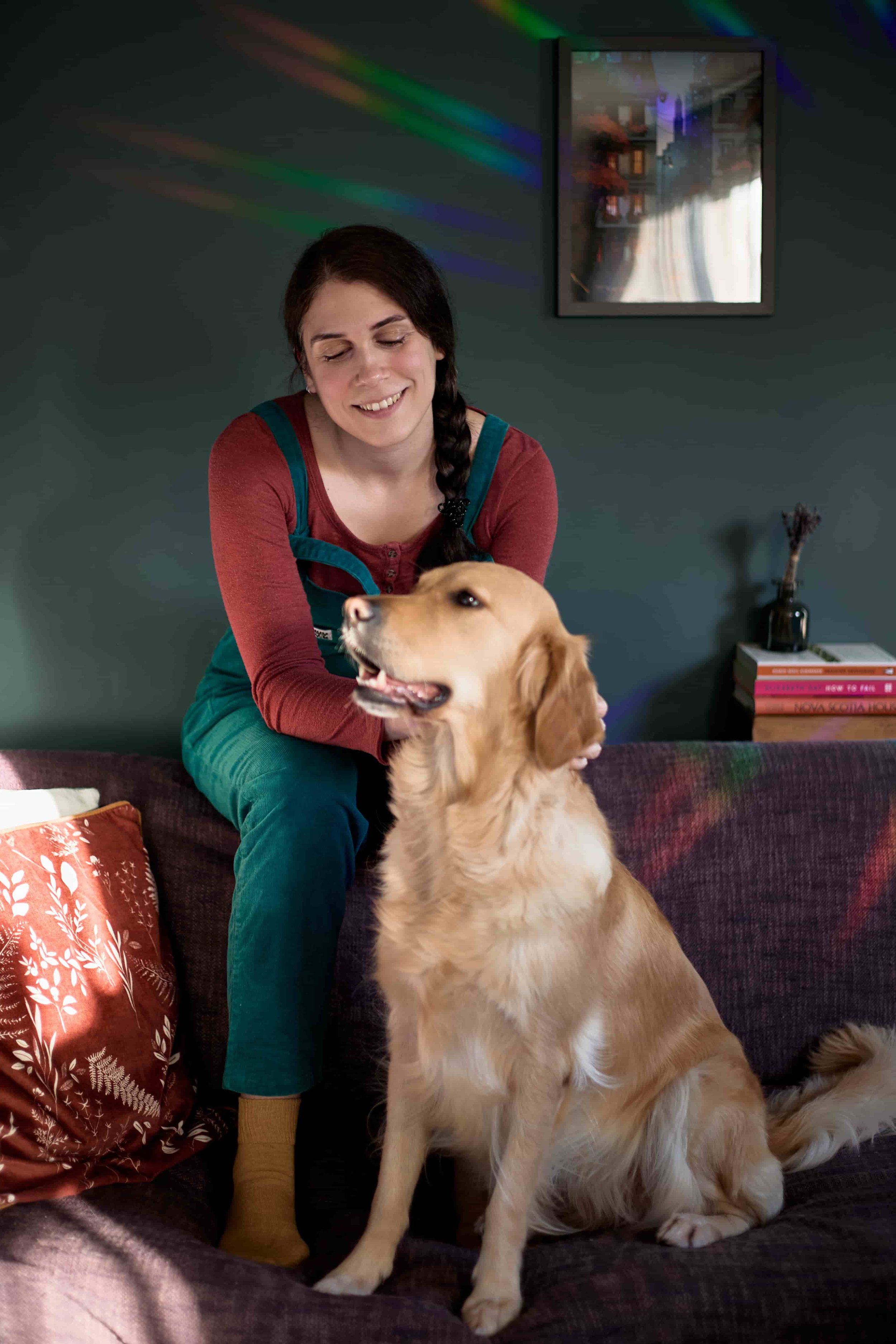
Apart from “second-wave” CBT, I love ACT and mindfulness (I’m also a trained mindfulness teacher) - and also research (I’ve published a few peer-reviewed papers). I’m also often found sipping tea, having a rant, and showing my dog to my supervisees.
If you’re curious about whether this might work for you, I offer a free, no-pressure initial chat.
